

Please ensure Javascript is enabled for purposes of website accessibility

Why Choose a 360 Degree Swivel Stand for Global Buyers?

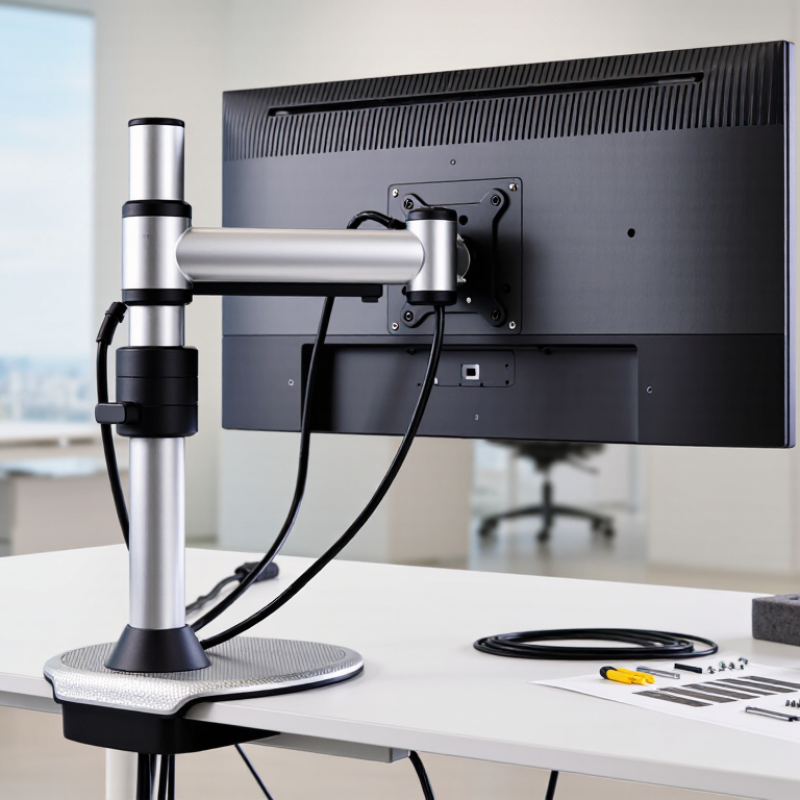
For global buyers, choosing a 360 degree swivel stand is not simply a matter of adding movement. The real question is whether that movement improves daily work without creating instability, noise, or installation problems. A buyer may rotate a monitor toward a colleague, adjust viewing angles beside a bright window, or turn a display during a presentation. These small actions can save time. They also reveal weak hinges quickly.

Don Norman, a leading usability and design expert, reminds designers, “Good design is actually a lot harder to notice than poor design.” That idea fits this product category closely. A reliable 360 degree swivel stand should feel smooth, hold its position, and remain quiet after repeated adjustments. Its base should resist tipping. Its joint should match the screen’s weight and VESA pattern. Cable routing should stay tidy during rotation, not pull against ports.

Details matter.

Global buyers also need evidence, not attractive product images. Ask for load-test results, material specifications, packaging details, warranty terms, and clear installation instructions. Check whether the product suits local electrical, workplace, and safety requirements when accessories are included. Corrosion resistance may matter greatly in coastal warehouses, while compact packaging can reduce damage during long-distance shipping.

No stand is perfect. A tighter joint may improve stability but require more hand force. A lighter base may reduce freight costs but limit compatibility. These trade-offs deserve honest review. Experienced suppliers should explain them clearly, provide samples for testing, and support buyers after delivery. That practical transparency helps turn a rotating accessory into dependable equipment for international use.
Why Choose a 360 Degree Swivel Stand for Global Buyers?

What Is a 360-Degree Swivel Stand?

A 360-degree swivel stand is a support structure that lets mounted equipment rotate fully around a central axis. It usually combines a stable base, rotating plate, bearing, and locking mechanism. The bearing supports smooth movement, while the lock holds the unit at a chosen angle.

In practical product evaluations, rotation quality depends on more than a wide turning range. A well-built stand should resist wobbling when users adjust the display, camera, or equipment. Check the stated load capacity, base dimensions, material thickness, and fastener quality. Cable channels also matter. Without proper routing, cables can twist during repeated rotation.

A useful stand should turn smoothly. Not too loose. A reliable locking system prevents unwanted movement on busy counters or workstations. Some designs use friction resistance, while others use fixed angle positions. Each option has limitations. Friction systems may loosen over time, and fixed positions may reduce adjustment flexibility.

For global buyers, installation instructions should show clear diagrams and specify compatible mounting patterns. Packaging should protect the bearing and metal edges from impact during transport. Buyers should also request rotation-cycle testing, surface-finish details, and corrosion-resistance information when the stand will face humidity. One overlooked issue is balance: a heavy device placed too far forward can make even a strong stand feel unstable.

How Does a 360-Degree Swivel Stand Work?

Why Choose a 360 Degree Swivel Stand for Global Buyers?

How Does a 360-Degree Swivel Stand Work?

A 360-degree swivel stand uses a rotating joint between its base and support platform. The joint usually contains bearings, a metal race, or a low-friction ring. These parts reduce resistance when the platform turns. With gentle hand pressure, users can view equipment from different angles without lifting or repositioning it.

The base carries the main load and spreads pressure across the supporting surface. A central shaft keeps the platform aligned during rotation. Some designs include a locking mechanism, allowing users to stop movement at a selected angle. This detail matters in busy work areas, where uncontrolled rotation may cause accidental contact or poor positioning.

In practical use, smooth movement depends on more than the bearing. Uneven floors, overloaded platforms, and loose fasteners can create wobbling. I have found that a stand may rotate well when empty but behave differently under full load. That assumption can be wrong. Buyers should check the rated capacity, platform size, rotation resistance, and installation instructions before choosing a model.

Material quality also affects service life. Steel supports heavier applications, while reinforced polymers can reduce weight and corrosion concerns. However, lighter does not always mean weaker, and metal does not guarantee better performance. Regular inspection helps identify unusual noise, side movement, or damaged hardware before these problems affect daily operation.

Why Choose a 360 Degree Swivel Stand for Global Buyers? - How Does a 360-Degree Swivel Stand Work?

Data Dimension Typical Value or Fact How It Works Why It Matters to Global Buyers
Rotation range Up to 360° continuous rotation A central spindle, bearing, or turntable ring allows the upper platform to rotate around a vertical axis. Users can view or position equipment from any direction without lifting or repositioning the entire stand.
Common bearing type Ball-bearing turntable, roller-bearing assembly, or plain bushing Rolling elements reduce sliding friction between the fixed base and rotating platform. The bearing choice affects smoothness, noise, service life, cost, and allowable load.
Typical load range Approximately 5–500 kg, depending on diameter, materials, bearing design, and load position The bearing and support structure transfer the vertical load to the base while resisting overturning forces. Buyers should compare rated load, safety factor, and load-center position instead of relying only on the stand’s external size.
Rotation direction Clockwise, counterclockwise, or reversible Manual models rotate by hand; powered versions use a motor, gearbox, and control system. Reversible movement is useful for inspection, product presentation, photography, and operator access.
Manual rotation speed User-controlled; commonly about 1–10 revolutions per minute during hand operation The operator applies torque directly to the rotating platform or attached handle. Manual operation avoids electrical certification requirements and is suitable for simple, low-duty applications.
Powered rotation speed Often adjustable from approximately 0.5–30 rpm A motor supplies torque through a gearbox or direct-drive mechanism; a controller regulates speed. Adjustable speed supports inspection, display, scanning, filming, and automated handling processes.
Platform diameter Commonly about 100–1,200 mm; larger custom platforms are possible The platform distributes the load over the bearing and determines the usable placement area. The diameter should accommodate the product footprint while leaving enough clearance for safe rotation.
Typical construction materials Steel, stainless steel, aluminum, engineering plastics, or combinations of these materials The frame provides stiffness, while the bearing system supports rotation and the surface provides product contact. Material selection affects corrosion resistance, weight, hygiene, durability, and shipping cost.
Surface finish options Powder coating, anodizing, zinc plating, brushed stainless steel, or polished surfaces A protective finish reduces exposure of the base material to moisture, abrasion, and chemicals. Finish requirements may vary by destination climate, industry regulations, and cleaning procedures.
Center-of-gravity requirement The load should remain as close as practical to the rotation axis An off-center load creates a larger overturning moment as the horizontal distance from the axis increases. Correct positioning improves stability, reduces bearing stress, and helps prevent uneven movement.
Cable-management method External cable loop, limited-angle routing, or slip ring for continuous rotation A slip ring transfers electrical power or signals across a rotating interface without twisting cables. This is essential when sensors, lights, displays, or powered tools must operate during continuous rotation.
Typical applications Product displays, inspection stations, camera platforms, laboratory equipment, monitors, and light machinery The rotating platform presents different sides of an object while the base remains stationary. One stand can support multiple viewing or access angles, improving space utilization and workflow efficiency.
Installation surface Desktop, floor-mounted, wall-mounted, or integrated into machinery Mounting holes, clamps, brackets, or a weighted base keep the stationary section secure. Buyers can select a configuration that matches available space, local installation practices, and transport constraints.
Maintenance requirement Periodic inspection; lubrication may be required for serviceable bearings Maintenance reduces friction, detects looseness, and helps protect the bearing from contamination. Simple maintenance procedures help reduce downtime and simplify after-sales support across different regions.
Key purchasing checks Load rating, platform size, rotation speed, mounting pattern, environment, and electrical requirements These specifications determine whether the mechanical and electrical systems are suitable for the intended duty. A complete specification reduces compatibility risks related to installation, shipping, safety, and local compliance.

Note: Load capacities, dimensions, speeds, and material combinations vary by design. Final selection should be based on the supplier’s verified technical drawing, rated load data, and application conditions.

Which Features Matter to Global Buyers?

A 360-degree swivel stand should do more than rotate smoothly. Global buyers need a stable platform that performs across different workplaces, rooms, and installation habits. Check the maximum load first. A stand carrying a large display must resist wobbling during rotation.

The swivel mechanism deserves careful attention. Metal bearings usually provide steadier movement than loose plastic joints. A useful design should rotate evenly, stop at chosen angles, and include a locking feature. Tilt adjustment can reduce glare near windows or overhead lighting. VESA compatibility also matters because screen mounting patterns vary between markets. Confirm the supported sizes before placing an order.

Build quality affects long-term reliability. Look for thick steel or reinforced aluminum, protected edges, and a wide, non-slip base. Powder coating can help resist scratches and surface corrosion during shipping. Packaging should protect the pivot and include clearly labeled screws. Small details matter.

Installation should not require specialist tools. Clear instructions and spare hardware reduce delays for distributors and end users. Buyers should request load testing, material information, and relevant safety documentation. Local requirements differ, so one certificate may not cover every destination. That part is easy to overlook.

A practical inspection should test repeated rotation, uneven surfaces, and cable movement. Cables can twist around the column. A built-in channel helps, but it may limit thicker cables. The perfect stand is rare. Reviewers should record these compromises instead of trusting smooth movement from a short demonstration.

Where Are Swivel Stands Commonly Used?

A 360-degree swivel stand is commonly used in retail stores, trade exhibitions, showrooms, and reception areas. It lets visitors view products from different angles without lifting or moving them. This works well for watches, small electronics, tools, packaged goods, and technical samples. In busy shops, smooth rotation can reduce handling and keep displays orderly.

Exhibition booths use swivel stands to attract attention from passing visitors. A product can face one aisle, then turn toward another. This simple movement helps staff explain features while the item remains secure. Museums and educational centers also use rotating stands for models, instruments, and detailed objects. Clear visibility matters when space is limited. It matters even more when several people gather around one display.

In offices and public service areas, these stands can hold information screens, sample boards, or directional materials. Some warehouses use them for inspection stations, where workers rotate parts before checking edges and connections. The correct stand still depends on load weight, base stability, surface friction, and expected traffic. A poor bearing may feel smooth at first but become noisy later. That is easy to overlook. Buyers should test rotation under the real product weight and review installation instructions carefully. No stand suits every environment. Humidity, dust, and frequent impact can change performance.

How Can Buyers Evaluate Quality, Cost, and Suppliers?

A 360-degree swivel stand can improve viewing angles, but buyers should inspect more than its smooth rotation. Ask for the tested load capacity, rotation-cycle results, and material specifications. A stable steel or reinforced alloy base should resist tipping when a device moves sideways. Check the swivel joint for quiet movement, controlled resistance, and visible gaps. Small gaps often collect dust and signal weak assembly.

Quality needs evidence. Request a production sample, inspection photos, and a clear tolerance sheet. In sample checks, I would rotate the stand repeatedly and place weight near its edge. This reveals wobbling faster than a short demonstration. Finish quality also matters. Look for even coating, protected corners, and packaging that prevents scratches. One test is never enough. My own inspection methods can miss hidden fatigue.

Cost evaluation should include the full purchasing picture. Compare unit price, minimum order quantity, tooling charges, packaging, freight, duties, and replacement terms. A cheaper stand may cost more after damaged deliveries or inconsistent batches. Ask whether spare components are available. Also confirm how the supplier handles design changes and late shipments.

Supplier reliability comes from traceable practices, not polished promises. Review factory capacity, quality-control records, export experience, and communication speed. Request references from similar projects when possible. A capable supplier should explain its testing process in specific terms. Vague answers deserve caution. Video audits help, but they cannot replace independent inspection before shipment. Clear drawings and written approvals reduce misunderstandings across time zones.