China Top Sound Proofing Material Suppliers
China’s top sound proofing material suppliers serve studios, offices, hotels, factories, and residential projects worldwide. Their products may include acoustic panels, mass-loaded vinyl, polyester fiber boards, rubber sheets, insulation batts, and vibration-control pads. Each material responds differently to airborne noise, impact noise, or mechanical vibration. A suitable choice depends on the room, frequency range, installation method, and project budget.
Reliable suppliers usually provide technical data, product samples, and clear manufacturing information. Look for measured sound absorption results, sound transmission ratings, density, thickness, fire-performance documents, and environmental certifications. Factory audits can reveal more than polished brochures. A warehouse with organized batches, labeled packaging, and consistent testing equipment often shows practical quality control. Experienced manufacturers also explain installation details, such as sealed joints, resilient channels, floating floors, and correct panel spacing.
Still, no supplier is perfect. A high rating on paper may not match performance after poor installation. A low price can hide thinner layers or unstable materials. This guide reviews China-based suppliers through product range, technical capability, communication, customization, production experience, and after-sales reliability. Real project evidence matters. So does honest discussion of limitations. Buyers should compare samples, test reports, lead times, and warranty terms before committing. The best sound proofing material is not always the heaviest or most expensive option. It is the one that fits the noise problem and performs consistently in the finished space.
Types of Soundproofing Materials Supplied by Chinese Manufacturers
China Top Sound Proofing Material Suppliers
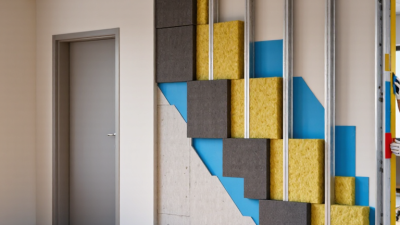
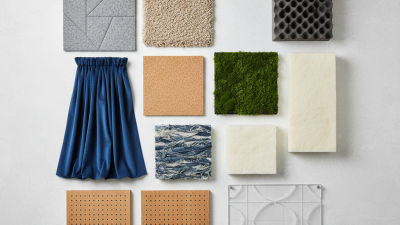
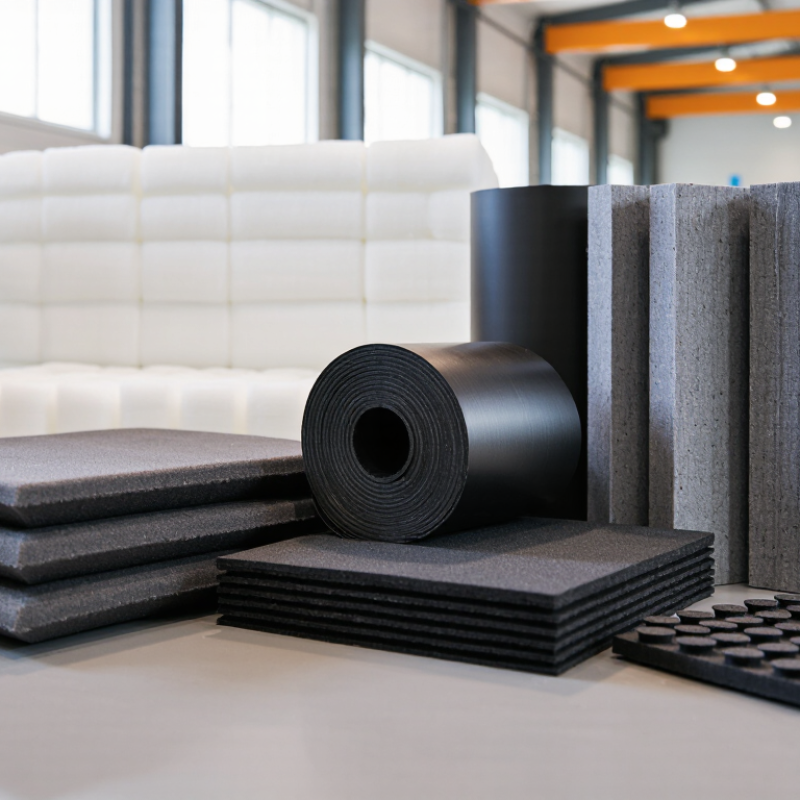
Chinese manufacturers supply several material types for different noise problems. Mineral wool and glass wool reduce airborne sound inside walls, ceilings, and machinery enclosures. Mass-loaded vinyl adds density behind drywall or under flooring. Acoustic foam and PET felt absorb reflections, but they do not block loud noise alone. Laminated acoustic glass helps control traffic noise through windows. Some factories also produce resilient channels, isolation hangers, and vibration pads.
The 2023 WHO Environmental Noise Guidelines recommend indoor bedroom noise below 30 dB(A) at night. This target shows why material choice must match the room, not only the product label. A 2024 Grand View Research estimate places the global acoustic insulation market above 15 billion US dollars, with steady growth through 2030. Yet laboratory ratings can disappoint on site. Flanking paths, poor sealing, and rigid bridges often weaken performance.
Tips: Ask Chinese suppliers for ISO 10140 or ASTM E90 test reports, thickness, density, fire classification, and installation drawings. Compare complete wall systems, not single-material claims. I would also request a small sample and inspect odor, edge quality, and compression. A cheaper panel may look efficient, but its real result can remain uncertain without measured installation data.
Key Performance Standards for Comparing Soundproofing Materials
China Top Sound Proofing Material Suppliers
Key Performance Standards for Comparing Soundproofing Materials
Reliable supplier comparisons should begin with measured performance, not impressive product photos. Airborne sound insulation is commonly assessed under ASTM E90 and rated through ASTM E413. The resulting STC value helps compare walls, doors, and panels in controlled laboratory conditions. ISO 10140 and ISO 717-1 provide similar testing frameworks internationally. However, laboratory results may not match a busy construction site. Gaps, rigid bridges, and poor sealing can reduce performance sharply.
Absorption requires a different measure. ASTM C423 reports the Noise Reduction Coefficient, or NRC, for materials tested in reverberation rooms. A higher NRC generally indicates better sound absorption, but it does not automatically mean better sound blocking. The 2018 WHO Environmental Noise Guidelines identify 53 dB Lden as a recommended upper level for road traffic exposure. That figure highlights the need for complete assemblies, not one isolated material. I would question any supplier offering only one rating.
Tips: Ask for recent third-party test reports, test frequency ranges, thickness, density, and installation details. Check fire reaction, moisture resistance, compression behavior, and recycled content separately. Request field evidence when possible. Small gaps matter. A perfect laboratory panel can fail after careless installation. Supplier documents also deserve scrutiny; some are clear, while others remain frustratingly incomplete.
China Top Sound Proofing Material Suppliers – Key Performance Standards for Comparing Soundproofing Materials
Representative Noise Reduction Coefficient (NRC) values by material class. NRC measures sound absorption, while STC or Rw is used to evaluate airborne sound insulation. Actual performance varies with thickness, density, mounting method, and tested frequency range.
NRC values are representative rounded values based on commonly published laboratory ranges for material classes and should not replace certified test reports. Key comparison standards include ASTM C423 and ISO 354 for sound absorption, and ASTM E90, ASTM E413, ISO 10140, and ISO 717-1 for airborne sound insulation.
How China’s Soundproofing Material Supply Chain Works
China Top Sound Proofing Material Suppliers
China’s soundproofing supply chain starts with raw materials, not finished panels. Mineral fibers, recycled PET, rubber, foam, and dense vinyl enter through regional chemical and textile networks. Converters then cut, laminate, mold, and pack these materials for construction, automotive, and industrial projects. Grand View Research estimates that the global acoustic insulation market will grow at more than 5% annually through the decade. This demand encourages Chinese factories to specialize instead of producing every component.
The process usually includes laboratory testing, factory inspection, and export consolidation. Reliable suppliers should provide density, thickness, fire rating, and sound absorption data. ISO 10140 testing is widely used for laboratory measurement of building sound insulation. However, test results can change with installation details. A panel that performs well in a laboratory may underperform beside an unsealed door or thin joint. That weakness deserves attention. The China Chamber of Commerce data and logistics reports also show how freight costs, port capacity, and seasonal production affect delivery schedules. Supply chains are efficient, but not perfectly predictable.
Tips: Request recent test reports, production photos, and batch samples. Check edge sealing, packaging strength, and moisture protection. Ask whether the quoted price includes testing, pallets, and export documents. Do not compare prices alone. A cheaper roll may contain lower density, inconsistent thickness, or weaker surface bonding. Suppliers should also explain their corrective-action process when inspection results fail.
Applications and Market Trends in China’s Soundproofing Industry
China’s soundproofing industry is shifting from simple material sales toward tested, application-specific systems.
The National Bureau of Statistics reported that China’s urbanization rate reached 66.16% in 2023. Dense housing, metro networks, schools, hospitals, and mixed-use buildings now create stronger demand for acoustic control.
Mineral fiber, recycled polyester, resilient channels, acoustic panels, and vibration isolation products serve different noise paths.
Airborne noise needs absorption and sealing. Impact noise needs floor decoupling.
Market research also indicates steady expansion.
Fortune Business Insights valued the global acoustic insulation market at about USD 14.6 billion in 2023. Its report forecasts continued growth through 2032, supported by construction, transport, and industrial applications. In China, suppliers increasingly provide laboratory test data, fire classifications, density ranges, and installation guidance.
GB 55016-2021 has strengthened attention to building sound insulation and indoor acoustic performance. However, supplier brochures can still present results without enough testing conditions. That weakness deserves more scrutiny.
Factories commonly use barriers, enclosures, and vibration pads around compressors and production lines.
Residential projects focus on party walls, drainage pipes, doors, and floor impact noise. Transport projects require durable systems that tolerate vibration, moisture, and maintenance access.
Real projects often fail at joints, penetrations, and poorly sealed edges. Material performance alone is not enough.
Buyers should compare tested frequency ranges, thickness, installation tolerances, and local climate exposure. The market is becoming more technical, but field verification remains uneven.