

Process Water Treatment is becoming a strategic necessity for factories operating under tighter water and discharge limits. Manufacturing sites need reliable water for boilers, cooling towers, rinsing lines, and production equipment. The challenge is immediate. UNESCO’s United Nations World Water Development Report 2024 connects rising water demand with population growth, urbanization, and industrial expansion. It also highlights increasing pressure on freshwater resources and unequal access to safe water. UN-Water’s SDG 6 progress reports show that wastewater management remains uneven across regions. Untreated industrial discharge can damage ecosystems, interrupt permits, and increase operating costs.
This guide examines the Top Process Water Treatment Companies for Global Buyers through practical purchasing criteria. These include treatment performance, lifecycle cost, energy demand, automation, service coverage, and compliance support. The Global Water Intelligence Global Water Market 2024 report identifies continued investment in water reuse, desalination, and industrial treatment infrastructure. MarketsandMarkets also reports sustained growth in the industrial wastewater treatment sector, supported by stricter regulations and resource recovery goals. Numbers differ between reports. That is worth noticing.
A credible supplier should provide pilot-testing evidence, reference installations, and clear performance guarantees. Buyers should inspect how a system handles variable flow, oily wastewater, high conductivity, or sudden contaminant loads. A polished brochure is not enough. The best companies combine engineering experience with measurable field results and responsive maintenance. Still, no supplier is perfect. Local chemistry, electricity prices, operator skills, and legal requirements can change the final decision. This comparison offers a useful starting point, not a substitute for site testing or independent technical review.
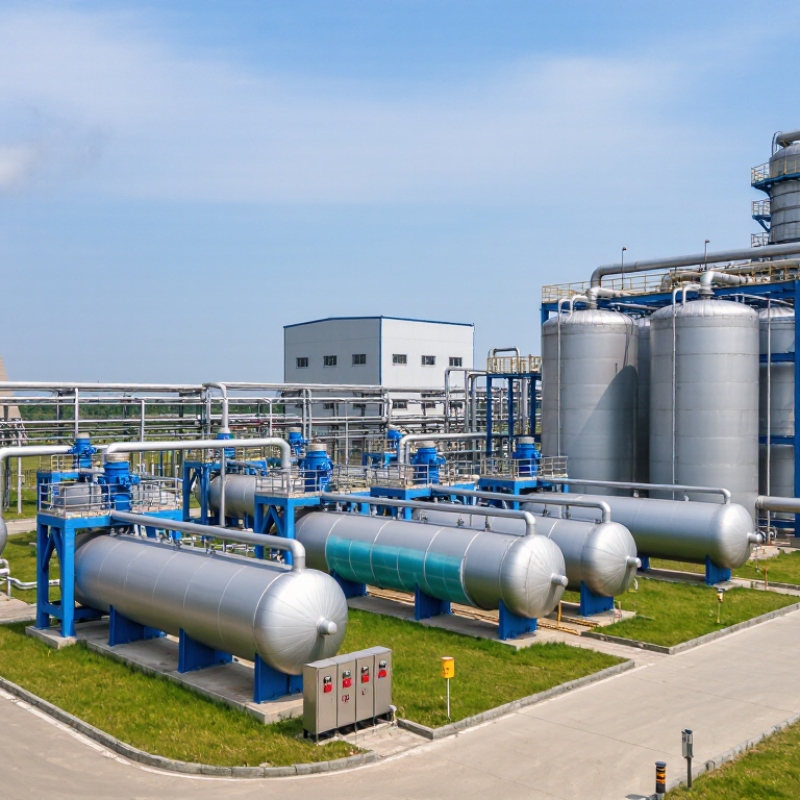
Process water treatment companies help industrial facilities control the water used in production, cleaning, cooling, and equipment protection. Their work begins with a site assessment. Engineers review raw water quality, production chemicals, discharge limits, and daily flow changes. A laboratory may test hardness, suspended solids, oils, metals, pH, and biological activity. Data matters.
These companies then design a treatment train suited to the facility. It may include filtration, clarification, softening, membrane separation, disinfection, or chemical dosing. The correct combination depends on the process, not on a standard package. For example, a food facility may need strict hygiene controls, while a metal plant may require careful removal of dissolved metals. Engineers also size pumps, tanks, sensors, and storage systems for changing demand.
Operation support is equally important. Specialists inspect equipment, calibrate instruments, review test results, and adjust treatment rates. They may train plant operators and create maintenance schedules for membranes, filters, valves, and dosing pumps. Reliable providers document water quality trends and support compliance reporting for local requirements. Small errors spread. A missed sample can hide a developing problem until production suffers.
Good companies also examine water reuse opportunities. Reusing treated water for cooling or washing can reduce freshwater demand, but it requires careful risk control. No design is perfect. Temperature shifts, seasonal water changes, and unexpected chemicals can reduce performance. Experienced teams leave room for testing, correction, and honest review instead of promising effortless operation.
Industrial water treatment now depends on matching technology to water chemistry, production risk, and discharge limits. UNESCO’s United Nations World Water Development Report 2024 estimates that agriculture uses about 70% of global freshwater withdrawals, increasing pressure on industrial users to recycle more process water. For global buyers, the treatment train often begins with screening, equalization, pH correction, coagulation, and clarification. These steps remove suspended solids before finer technologies face the load.
Membrane systems provide the main polishing stage. Ultrafiltration can reduce colloids and microorganisms, while reverse osmosis removes dissolved salts and many trace contaminants. Ion exchange remains useful for demineralization and boiler-feed preparation. Biological reactors can reduce biodegradable organic matter, but temperature and toxicity changes may destabilize performance. Sensors for conductivity, turbidity, pH, and oxidation-reduction potential help operators respond before quality drifts.
Energy remains a serious limitation. Reverse osmosis produces a concentrated reject stream, and zero-liquid-discharge systems can require substantial heat and electricity. UNEP’s Wastewater: Turning Problem to Solution report indicates that roughly 80% of global wastewater is released without adequate treatment, showing the scale of the challenge. Yet recovery percentages can mislead. A high rate may still hide scaling, brine disposal, or difficult maintenance. I would examine pilot data, seasonal chemistry, cleaning frequency, and operator experience before trusting a specification sheet. Small details matter: a clogged cartridge filter can interrupt an otherwise advanced treatment line.
Leading process water treatment companies by global market are judged beyond sales volume. Strong providers combine process engineering, reliable equipment, and regional service teams. Their systems may include ultrafiltration, reverse osmosis, demineralization, or advanced biological treatment. The right choice depends on water chemistry, production demands, discharge rules, and reuse targets. Site experience matters. A provider familiar with cooling towers may not understand pharmaceutical process water. Market rankings also shift as energy prices, regulations, and industrial investment change.
Buyers should request operating data from comparable facilities. Ask about recovery rates, membrane life, chemical use, automation, and maintenance response times. A clear performance guarantee is useful, but it does not replace independent testing. Some suppliers present impressive efficiency figures. Real performance can decline with poor pretreatment or inconsistent feedwater. This is often overlooked.
Tips: Compare lifecycle cost, not only purchase price. Review local technicians, spare-parts access, and operator training. Check whether the design can expand when production grows. Request references from facilities with similar contaminants and operating hours. Keep a small contingency for unexpected fouling, sensor failure, or seasonal water changes. No provider fits every site perfectly.
Top Process Water Treatment Companies for Global Buyers
Global buyers should compare process water treatment companies through verified performance, not polished claims. Quality begins with stable output under changing feedwater conditions. Ask for laboratory results, pilot data, and commissioning records from similar industrial sites. A system that meets targets for one month may struggle during seasonal changes or production peaks. Evidence matters.
Capacity can mislead. Confirm daily flow, peak flow, contaminant loading, recovery rate, and available redundancy. A plant rated for 500 cubic meters per day may perform poorly when solids or temperature changes sharply. Review pump curves, membrane replacement schedules, energy use, and sludge handling arrangements. Site references are valuable, especially when they involve similar water chemistry and operating hours.
Compliance should cover the full operating life. Suppliers should explain permit requirements, sampling methods, discharge limits, worker protection, and documentation practices in each market. Independent testing adds credibility. So does a clear audit trail from design through maintenance. Compliance is not a certificate on a wall.
A credible comparison also examines service response. Can technicians reach the site quickly? Are spare parts available locally? Are operators trained in practical troubleshooting? Field reviews sometimes expose gaps between contract promises and daily support. That gap matters. Buyers should leave room for uncertainty, request realistic performance guarantees, and treat pilot results as evidence rather than absolute proof.
Top Process Water Treatment Companies for Global Buyers
Choosing a Process Water Treatment Partner for Global Projects
Choosing a process water treatment partner requires more than comparing equipment prices. Global buyers need evidence of field experience, technical depth, and dependable project support. Ask for references from facilities with similar feedwater, production volumes, and climate conditions. A system designed for a coastal factory may behave differently in a dry inland site.
Request a clear water analysis before accepting a proposal. The partner should explain pretreatment, membrane selection, chemical use, energy demand, and expected recovery rates. Practical details matter. Who will train operators? Are critical spare parts available locally? Can remote monitoring continue during weak internet service? These answers reveal operational maturity.
Look for documented testing, qualified engineers, and transparent performance guarantees. A pilot trial can expose scaling, fouling, or seasonal changes before construction begins. It may slow the schedule, but rushed design creates larger costs later. No partner gets every estimate right. Reliable firms admit uncertainty and show how they manage it.
Review communication habits during the tender stage. Delayed replies often become delayed decisions on site. Strong partners provide drawings, maintenance intervals, safety procedures, and change-control records in language local teams can use. They also understand permitting differences without making unsupported legal claims. Global projects need coordination across time zones, suppliers, and contractors. That work is less visible than the treatment unit, yet it often determines whether the plant performs consistently.
Typical water-recovery benchmarks help global buyers compare treatment approaches, assess reuse potential, and define performance requirements before selecting an engineering and service partner.
The chart shows representative recovery-rate midpoints from commonly reported technology ranges: conventional biological treatment 80–95%, membrane bioreactors 85–95%, ultrafiltration 90–98%, reverse osmosis 50–85%, and zero-liquid-discharge systems 95–99%. Actual performance depends on feed-water quality, pretreatment, operating conditions, local regulations, and the required product-water specification.