

Please ensure Javascript is enabled for purposes of website accessibility

Top 10 Tips for Choosing a Solar Charge Controller?

Choosing the right Solar Charge Controller can significantly impact your solar power system's efficiency. With many options available, it's crucial to understand what features will best meet your needs. A solar charge controller manages the flow of energy from solar panels to batteries. Selecting the wrong one can lead to poor performance and even damage.

Consider factors such as voltage, current, and battery compatibility. The right specifications are essential for optimal function. Many users overlook the importance of understanding these aspects. This oversight could result in wasted energy or battery issues. Reliability and performance should be your top priorities.

Manufacturers often provide detailed technical specifications. However, these may not always be user-friendly. It requires some effort to interpret these figures correctly. Researching user experiences can provide valuable insights. Remember, what works for one person may not work for you. Always think critically about reviews and recommendations.
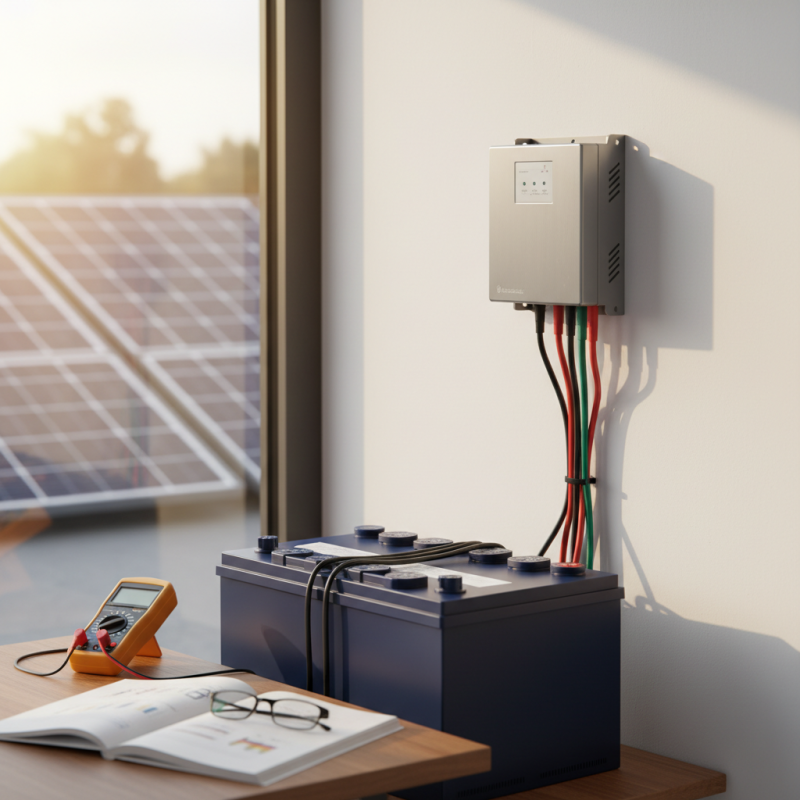
Top 10 Tips for Choosing a Solar Charge Controller?

Understanding the Functionality of Solar Charge Controllers

When selecting a solar charge controller, it's crucial to understand its core functionality. Solar charge controllers manage the energy flow from solar panels to batteries. They prevent overcharging and deep discharging, which can damage the battery lifespan. A well-functioning controller improves efficiency and enhances battery performance.

Tip 1: Consider the type of solar system you have. MPPT controllers are efficient for larger systems, while PWM controllers suit smaller setups. They both differ in efficiency and cost.

Understanding your energy needs is key. Know how much energy your system requires daily. This helps you choose the right capacity for the controller.

Tip 2: Check the voltage compatibility. Ensure the controller matches your solar panel and battery voltage. Mismatches can cause inefficiency and potential damage.

Another factor is the controller's features. Some controllers offer built-in monitoring systems. This allows you to track performance and receive alerts.

Tip 3: Look for engaging user interfaces. A good display can simplify navigation and understanding of your solar system.

Finding the right solar charge controller requires consideration. Each choice brings unique challenges. Always reflect on what works best for your specific circumstances.

Assessing Your Solar Power Needs and System Compatibility

When assessing your solar power needs, it's important to consider your energy consumption. According to the U.S. Energy Information Administration, the average American household uses around 877 kWh per month. Understanding how much power you need can help pinpoint the right solar charge controller. The right controller ensures efficient energy management and maximizes the benefits of your solar system.

Compatibility between the solar panels, batteries, and charge controllers is equally essential. Different technology types, such as PWM and MPPT, serve unique purposes. Research indicates that MPPT controllers can increase efficiency by up to 30% compared to PWM. Evaluating the specifications of your system helps in making informed choices. Many users overlook this compatibility aspect, leading to potential inefficiencies and energy loss.

Examining your location is crucial too. Solar potential varies by region, impacting your setup. In some areas, sunlight may be limited, affecting overall performance. Data from the National Renewable Energy Laboratory shows that solar performance can be reduced drastically in overcast conditions. Keeping these factors in mind will guide you toward an optimal solar charge controller.

Evaluating Different Types of Solar Charge Controllers Available

When evaluating different types of solar charge controllers, understanding their features is crucial. There are primarily three types: PWM (Pulse Width Modulation), MPPT (Maximum Power Point Tracking), and hybrid controllers. Each has its advantages and contexts where they excel. PWM controllers are simpler and often more affordable, but they may not fully utilize the power generated by solar panels.

On the other hand, MPPT controllers offer higher efficiency. According to the National Renewable Energy Laboratory, MPPT controllers can enhance energy harvest by up to 30%. Their ability to adjust the voltage and current from solar panels allows for optimal power transfer under varying conditions. This technology is particularly valuable in locations with fluctuating sunlight.

Despite their benefits, MPPT controllers can be more complex and expensive. Users should consider their specific needs and budget. Hybrid controllers combine features of both PWM and MPPT systems, but their functionality can sometimes be excessive for smaller setups. Reflecting on use cases can reveal if enhanced complexity justifies the added cost, especially in residential installations. Evaluating all options critically helps ensure the chosen controller aligns with specific energy goals.

Key Features to Look for in a Quality Solar Charge Controller

When choosing a solar charge controller, key features play a crucial role in ensuring efficiency and longevity. A reliable model should have an integrated processor that monitors battery health. This helps prevent overcharging, which can damage the battery. Look for a controller with customizable settings. This allows proper regulation based on different solar panel setups.

One important tip is to consider the type of batteries you are using. Not all controllers are compatible with every battery type. Make sure the controller matches the chemistry of your batteries. Some charge controllers provide compatibility for multiple types. This flexibility can be beneficial as your needs evolve.

Monitoring capabilities are another essential feature. A quality solar charge controller should offer real-time data on charging status and battery health. Some controllers even have mobile app integration for remote monitoring. It's worth reflecting on how often you'll check these details. You may find that frequent monitoring isn't always necessary. Balancing convenience with effective management is key. Make sure to evaluate how these features align with your solar energy goals.

Budget Considerations When Selecting a Solar Charge Controller

When selecting a solar charge controller, budget considerations are paramount. The price range for these controllers can vary significantly. A basic model may cost around $20, while advanced options can exceed $500. Understanding this range helps consumers make informed choices. A recent industry report indicates that approximately 40% of users prioritize cost savings when selecting solar equipment.

Investing in a quality solar charge controller can yield long-term benefits, despite the initial cost. A well-functioning controller can increase the efficiency of your solar system by 30%, based on industry studies. However, the cheapest option isn't always the best. Users often find that lower-priced models lack essential features. This can lead to inefficiencies and ultimately higher costs over time.

Moreover, while some budget controllers may seem appealing initially, they often compromise reliability. Many users report issues such as overheating and connection failures after a year of use. Such problems can not only disrupt power supply but also damage batteries. It is crucial to balance budget constraints with performance expectations. Investing slightly more upfront may result in significant savings in maintenance and replacements down the line.

Top 10 Tips for Choosing a Solar Charge Controller

This chart illustrates the importance level of various factors to consider when choosing a solar charge controller. Each factor is rated on a scale from 1 to 10, helping users prioritize their selection criteria.