

10 Tips for Choosing a Modular Conveyor Belt?
Choosing a Modular Conveyor Belt is not just a matter of matching width to a production line. The right belt must suit the product, operating temperature, washdown routine, and available maintenance time. A belt carrying damp vegetables faces different demands from one moving warm packages across a distribution floor. Small details matter. A tight transfer gap, for example, may affect product handling as much as the belt material itself.
This guide presents ten practical considerations to help buyers compare options with clearer expectations. It covers material selection, module design, belt pitch, load capacity, surface style, and compatibility with existing sprockets and conveyor frames. It also looks at cleaning access, operating conditions, maintenance, and supplier support. These checks can help prevent avoidable downtime, but they cannot replace measurements taken at the actual installation site.
Start with the product and process, not a catalogue photograph. Note the load, speed, contact conditions, and any sharp edges or sticky residues. Ask suppliers for relevant technical data, such as temperature limits and recommended operating loads. Then verify those details against your conveyor’s layout. A specification may look convincing on paper. Real production is less tidy. Even experienced teams can overlook a transfer point or underestimate cleaning effort. That is worth admitting, because a careful review now is usually easier than changing a belt after installation.
Define the Conveyor’s Purpose and Operating Requirements
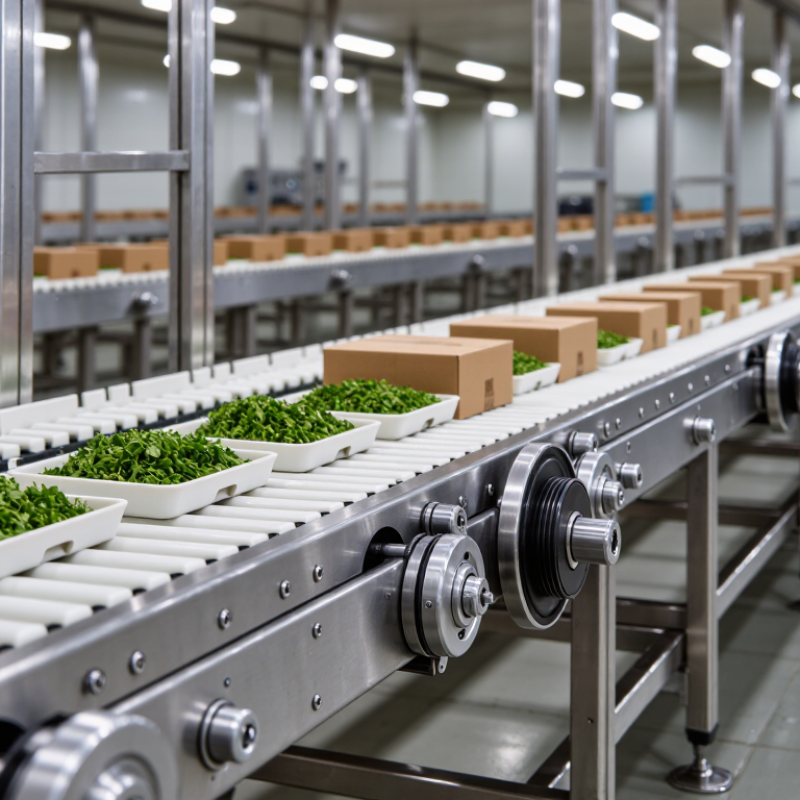
Before comparing belt materials or module shapes, define what the conveyor must do each day. Will it carry warm parts, wet produce, sharp-edged components, or packaged goods? Note the product’s weight, dimensions, temperature, and surface condition. Then map the route, including turns, inclines, transfers, and washdown areas. Small details matter. A narrow transfer gap can catch a product that moves smoothly on a straight section.
Tip: Write down the normal load and the heaviest expected load. Include the number of operating hours, start-stop frequency, and desired belt speed. These figures help suppliers assess drive requirements and belt support. I’ve seen specifications focus on peak capacity while overlooking frequent starts. That can be an expensive blind spot.
Define the environment, too. Dust, moisture, oils, cleaning chemicals, and temperature changes can affect belt choice and service life. Describe cleaning methods and access constraints, not just the room’s temperature. Ask maintenance staff where wear, debris buildup, or difficult belt removal usually occurs. Their observations may complicate the original plan, but that is useful. A conveyor that fits the process on paper may still be awkward to inspect or clean. Record uncertainties and test assumptions with a representative product before final selection.
10 Tips for Choosing a Modular Conveyor Belt? – Define the Conveyor’s Purpose and Operating Requirements
| Requirement to Define | Questions to Ask | Why It Matters | Example Specification |
|---|---|---|---|
| Conveying purpose | What product or material will the conveyor move, and what process will it support? | The application determines the belt layout, surface style, and required handling characteristics. | Move packaged food containers between filling and inspection stations. |
| Product dimensions | What are the smallest and largest product dimensions and weights? | The belt width and module design must support the product without tipping, snagging, or falling between openings. | Products range from 80 to 300 mm wide and weigh up to 2 kg. |
| Throughput | How many items must the conveyor move per minute or hour? | Throughput helps establish belt speed and the capacity of the overall line. | Target rate: 60 items per minute at a controlled, consistent flow. |
| Operating speed | Will the belt run continuously, intermittently, or at variable speeds? | Speed and start-stop frequency affect drive selection, control requirements, and product stability. | Variable speed from 5 to 20 m/min with frequent production-line stops. |
| Conveyor path | Does the route include straight sections, turns, inclines, or declines? | The path influences belt configuration, transfer points, and the need for suitable side guides or turning modules. | One straight section followed by a 90-degree horizontal turn. |
| Operating environment | What temperatures, moisture levels, dust, chemicals, or washdown conditions will the belt encounter? | Environmental exposure can affect belt material, service life, cleaning methods, and operating reliability. | Indoor area with routine water washdown and ambient temperatures of 5–35°C. |
| Hygiene and cleaning | What cleaning frequency and sanitation procedures are required? | Open belt designs and accessible components can make inspection and cleaning easier where hygiene is important. | Daily cleaning with approved detergent and visual inspection before production. |
| Product contact and belt surface | Does the product need a flat, textured, low-friction, or high-grip surface? | The surface affects product movement, accumulation, release, and the risk of slipping or marking. | Flat-top surface for stable transport of rigid containers. |
| Installation and maintenance | What space is available, and how quickly must belt sections be inspected or replaced? | Modular belts can simplify repairs by allowing individual sections to be replaced, but access and spare parts still need planning. | Provide side access for routine inspection and keep compatible replacement modules on site. |
| Safety and integration | What guarding, emergency stops, sensors, and upstream or downstream connections are needed? | Clear interface and safety requirements help the conveyor operate reliably within the complete production line. | Guard accessible pinch points and coordinate photoelectric sensors with adjacent equipment. |