How to Choose the Best Black Barn Door Hardware?
Choosing the best Black Barn Door Hardware involves more than matching a matte finish to rustic wood. The right system must carry the door safely, move quietly, and suit the room’s daily demands. A heavy oak door needs stronger rollers than a lightweight pine panel. A narrow hallway needs careful clearance planning. Small details matter.
Architectural hardware specialist Gary Striegler offers a practical reminder: “Good craftsmanship begins with accurate measurements and careful preparation.” That principle applies directly to barn door hardware. Measure the door’s width, thickness, and weight before comparing kits. Check the wall structure, header strength, track length, and handle clearance. A black coating may look durable, but its quality can vary between powder-coated steel, painted metal, and specialized finishes.
Function comes first.
This guide examines track capacity, roller design, mounting strength, door stops, floor guides, and finish durability. It also considers sound, maintenance, and installation conditions. For example, a bedroom door may benefit from quieter rollers, while a pantry door may prioritize easy cleaning. Not every attractive kit is suitable for every opening. That is where many buying decisions become less certain.
There is room for honest reflection. A cheaper kit can appear practical, yet weak mounting points may create trouble later. A premium system can perform beautifully, but its value depends on correct installation. The best Black Barn Door Hardware balances appearance, safety, movement, and long-term reliability. This guide will help readers compare those factors carefully, without relying on photographs alone.
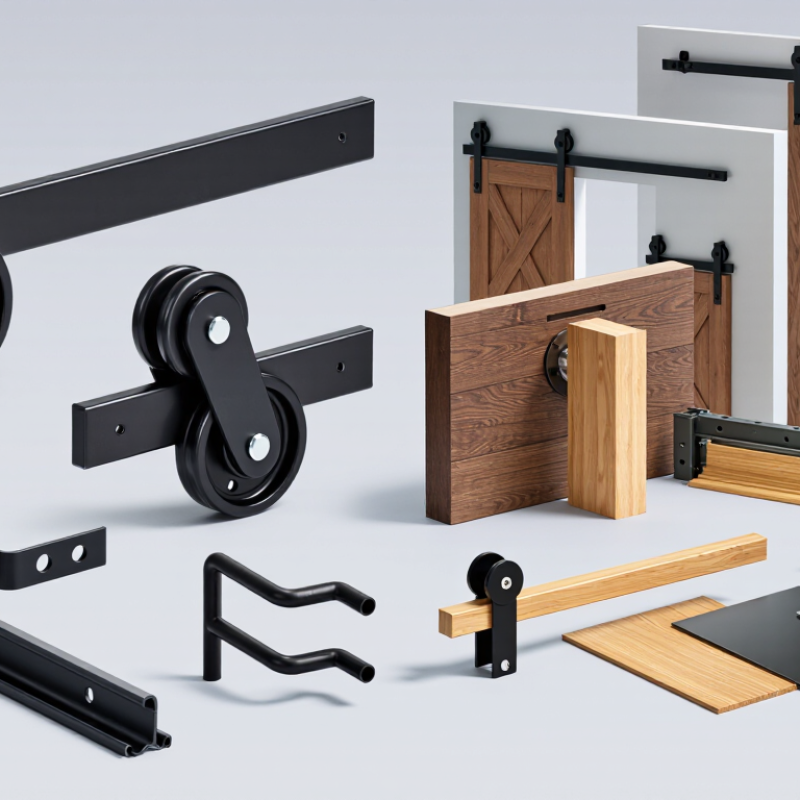
Define the Style and Function of Black Barn Door Hardware
Black barn door hardware should be selected as a working system, not a decorative afterthought. Style establishes the room’s visual language, while function controls alignment, noise, and durability. Matte black complements steel frames, natural oak, and restrained interiors. However, black is not one finish. Smooth powder coating hides fingerprints better, while textured coating can trap dust near kitchens. I learned this through a poor sample choice. It looked refined, but cleaning cloths caught on its rough surface. Grand View Research’s 2024 Architectural Hardware Market analysis projects approximately 6% compound annual growth through 2030, reflecting continuing renovation and replacement demand.
Function begins with the door’s weight and movement. Select rollers and a rail rated above the actual door mass, preferably with a clear safety margin. Check the rail thickness, mounting points, anti-jump devices, and floor guide. Small details matter. A missing floor guide can create visible swinging and repeated wall contact. ANSI/BHMA A156.14 provides performance criteria for sliding and folding door hardware, so its testing framework offers a useful professional reference. Measure the opening twice, including baseboards and handle clearance. Some installations still fail because the chosen handle touches the wall. That mistake is easy to overlook. For frequently used doors, sealed bearings and adjustable rollers usually justify their higher cost, although oversized hardware can make a narrow room feel visually heavy.
How to Choose the Best Black Barn Door Hardware?
Define the style and function of black barn door hardware by matching the track length to the door width. For a single sliding door, a track of approximately twice the door width allows the door to open fully and remain stable during operation.
How to read the chart: Choose a black track that is at least twice the door width. For example, a 36-inch door generally requires a track of about 72 inches. After confirming the length, check the hardware’s weight capacity, wall support, roller quality, and clearance before selecting the final style.
Measure the Door and Select the Correct Hardware Size
Choosing black barn door hardware starts with accurate measurements, not appearance. Measure the door slab’s width, height, and thickness with a steel tape. Record each number. I once measured the opening but forgot the trim, leaving too little overlap on one side. That small mistake changed the installation plan.
For reliable coverage, the door should usually extend at least two inches beyond each side of the opening. A track commonly needs to be twice the door’s width, allowing the door to slide fully clear. Check the space above the opening, too. The track, rollers, and door need enough clearance to move without touching the ceiling or trim. Measure twice.
Next, match the hardware size to the door’s weight and thickness. Solid wood doors require stronger rollers than lightweight panels. Check the hardware’s stated weight capacity, then compare it with the finished door, including handles and accessories. The mounting surface matters as well. Fasten the track into suitable structural support, not only drywall. If studs do not align, use an appropriate mounting board secured correctly to the wall structure.
Black hardware can highlight dust, scratches, and uneven wall lines. Inspect the track length, roller spacing, and handle position before drilling. I prefer marking every hole with the door temporarily held in place, although this takes longer. A rushed layout may look acceptable at first, but poor clearance becomes obvious after daily use.
Compare Hardware Materials, Finishes, and Weight Capacities
Choosing black barn door hardware starts with the metal beneath the finish. Steel offers strong value and supports many interior doors. Stainless steel resists humidity better, especially near kitchens or bathrooms. Aluminum is lighter, but it may flex under heavy solid-wood slabs.
Finish matters too. ANSI/BHMA A156.18 classifies architectural hardware finishes by appearance and performance. A matte black powder coat hides fingerprints and small scratches well. However, chips can expose bare steel and invite rust. ASTM B117 salt-spray testing uses a 5% salt solution at 35°C, but it does not guarantee identical home performance. Coastal air remains demanding. I would inspect the coating around screw holes and roller edges, where damage often starts.
Weight capacity deserves careful attention. Read the complete system rating, not only the track rating. Include the door, glass, trim, and possible impact loads. A 90-kilogram door should not use hardware rated for exactly 90 kilograms. Many installers allow a practical 25–50% reserve, although this is not a universal code requirement. EN 1527:2013 evaluates sliding-door hardware through durability testing, commonly referencing 25,000 operating cycles. Ask whether the tested assembly matches your door size and roller arrangement. Two rollers may feel stable, yet poor wall anchoring can still cause movement. I have seen beautiful black hardware fail because the fasteners missed structural framing. The finish looked perfect. The installation was not.
Check Installation Requirements, Safety, and Long-Term Maintenance
How to Choose the Best Black Barn Door Hardware?
Choosing black barn door hardware starts with the door, not its color. Measure the door’s width, height, thickness, and weight before shopping. The track should usually extend beyond the opening on both sides. Confirm that the wall can support the track and door. Solid framing or a properly installed mounting board is essential. Drywall alone is not enough.
Safety deserves close attention. Select rollers rated above the door’s actual weight, and check whether the track includes anti-jump devices and door stops. A floor guide helps prevent swinging, especially in busy hallways. Leave enough clearance for handles, baseboards, and nearby furniture. I have seen attractive installations fail because the door rubbed against trim. That detail is easy to miss.
Tips: Use a level during installation, then test the door slowly by hand. Tighten loose fasteners after several days of use. Wipe black hardware with a soft, dry cloth, and avoid abrasive cleaners that can dull the finish. Inspect rollers, screws, and stops every few months. If movement becomes noisy or uneven, do not ignore it. The problem may be a loose fastener, an obstructed track, or uneven flooring. Maintenance feels minor, but skipping it can shorten the hardware’s working life.