

Please ensure Javascript is enabled for purposes of website accessibility

How to Choose the Best Automated Parking Management Systems?

In today’s fast-paced urban environment, effective parking solutions are essential. Automated Parking Management Systems have emerged as a viable solution to address parking challenges. These systems streamline parking processes, reduce waiting times, and maximize space usage. This technology utilizes advanced robotics and software to manage vehicle storage and retrieval automatically.

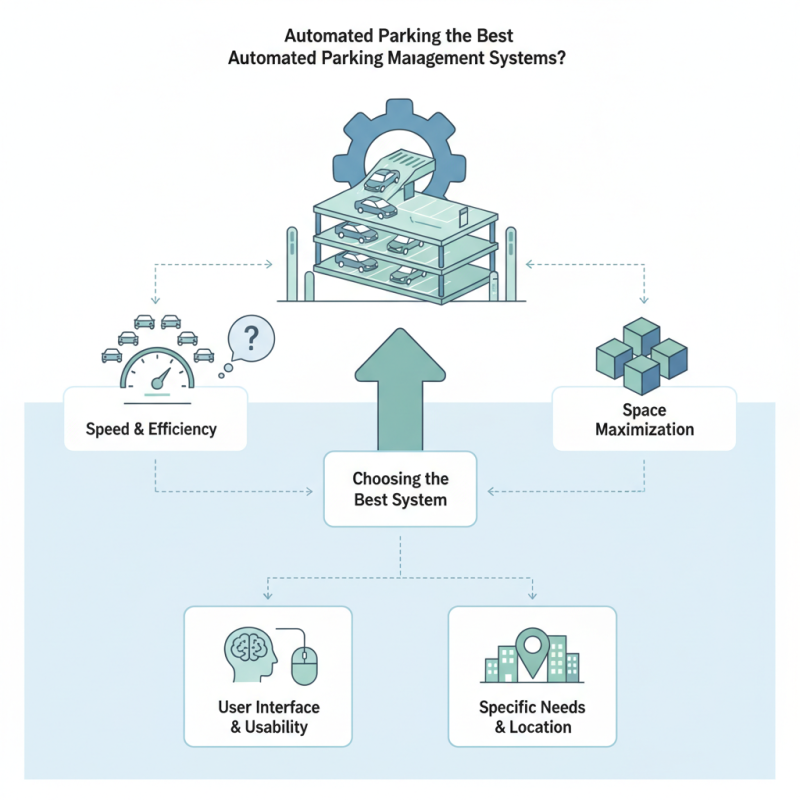
When selecting the best Automated Parking Management Systems, it's crucial to consider various factors. Not all systems are created equally. Some may prioritize speed, while others focus on maximizing space efficiency. Evaluating your specific needs will guide your decision-making. Remember, a system that works well in one location may not suit another.

Moreover, the integration of user-friendly interfaces is significant. These interfaces can enhance the parking experience for drivers. However, not all automated systems provide intuitive designs. It's important to reflect on both functionality and usability. This careful consideration will help you choose a system that meets your requirements effectively.
How to Choose the Best Automated Parking Management Systems?

Understanding Automated Parking Management Systems: An Overview

Automated Parking Management Systems (APMS) revolutionize how vehicles are parked and retrieved. These systems utilize advanced technology to optimize space and improve efficiency. Research by the International Parking Institute indicates that APMS can increase space utilization by up to 60%. This improvement directly translates to higher revenue for parking facilities.

While implementing an APMS can be beneficial, it’s essential to understand several key elements. One important factor is the integration with existing infrastructure. Businesses must assess their current layout and technology. A poorly executed integration may lead to congestion and user frustration. The ease of use for customers also significantly impacts system success. Users prefer systems that are intuitive and quick.

Tips: Consider user experience when selecting an APMS. A complex interface can deter usage. Additionally, regularly evaluate system performance to identify bottlenecks. The ongoing evolution of technology requires constant feedback and adaptation. Monitoring user interactions ensures systems remain effective and improve over time.

Key Features to Look for in Parking Management Solutions

Choosing the right automated parking management system is crucial for modern urban infrastructure. Key features should focus on efficiency and user experience. A user-friendly interface can significantly enhance the adoption rates among drivers and operators. According to a recent report by the International Parking Institute, systems that simplify user interaction can increase compliance by up to 35%.

Data analytics capabilities are also vital. These systems should provide real-time data on parking availability and trends. Reports indicate that cities utilizing data-driven parking solutions experience a 15-20% increase in occupancy rates. Such features can help in optimizing space and managing traffic flow effectively.

Integration with mobile applications adds another layer of convenience. Users appreciate finding and reserving parking spots via their smartphones. Statistics show that parking apps can reduce the time spent searching for spaces by 40%. The flexibility to adapt to user needs influences the system's effectiveness. It's worth noting that not every solution meets these essential criteria. Failing to prioritize these features can result in ineffective systems that frustrate users and lead to lost revenue.

Key Features of Automated Parking Management Systems

Evaluating Cost-Effectiveness of Automated Parking Systems

Evaluating the cost-effectiveness of automated parking systems is crucial for decision-makers. When investing in such systems, organizations should assess both short-term and long-term financial impacts. A recent study from the International Parking Institute reported that automated systems can reduce operational costs by up to 30%. This could significantly lower staffing expenses while enhancing operational efficiency.

However, the initial investment can be daunting. The setup costs for automated systems vary widely, sometimes exceeding one million dollars. Organizations must calculate the return on investment (ROI) over time. Research indicates that facilities can see payback within five to seven years, depending on usage rates. This timeframe can be affected by factors such as local real estate prices and parking demand.

Additionally, the value of space also needs consideration. Automated parking systems can increase the number of vehicles accommodated in a given area. Some reports suggest density increases of 20% to 40% compared to traditional systems. Yet, stakeholders should remain cautious about overpromising these benefits. Not every urban environment is suitable for high-density solutions. Regular evaluations are necessary to adjust strategies and measure true effectiveness.

How to Choose the Best Automated Parking Management Systems? - Evaluating Cost-Effectiveness of Automated Parking Systems

Feature Description Cost Range (USD) ROI Period (Years) Maintenance Cost (Annual)
Automated Ticketing Streamlines entry and exit processes for users. 15,000 - 30,000 2 - 3 1,000
Space Optimization Maximizes the number of vehicles accommodated. 25,000 - 50,000 3 - 4 1,500
User Interface Ease of use for customers and staff. 10,000 - 20,000 1 - 2 800
Integration Capability Ability to integrate with existing systems. 5,000 - 15,000 1 - 3 600
Scalability Capacity to grow with demand. 20,000 - 40,000 2 - 4 700

Assessing Integration and Compatibility with Existing Infrastructure

When choosing an automated parking management system, integration and compatibility with existing infrastructure are crucial. A seamless integration ensures the system works efficiently with your current setup. Consider factors such as hardware interfaces, software APIs, and communication protocols. Each of these aspects plays a significant role in the overall functionality. Without proper compatibility, the system may underperform or cause disruptions.

It’s also essential to evaluate the flexibility of the new system. Will it adapt to future infrastructure upgrades? Look for systems that allow easy modifications. A rigid setup can become obsolete quickly, leading to frustration and wasted resources. Moreover, the complexity of integration can vary. Some systems might require extensive technical expertise to install and maintain.

Assessing integration challenges often reveals hidden pitfalls. A lack of thorough testing might overlook critical issues. User feedback can provide insights into potential problems that may arise during integration. Building a satisfactory user experience is vital, and incompatibility can significantly hinder that goal. Ensuring you gather thorough input from stakeholders can help refine this process.

Analyzing Customer Support and Maintenance Services Offered

When selecting an automated parking management system, customer support and maintenance services are crucial factors. A 2022 survey indicated that 45% of users reported issues that could be resolved easily with efficient support. This highlights the significance of timely and accessible customer service. Companies with 24/7 support tend to have higher satisfaction rates. Customers feel valued when they know help is just a call away.

Maintenance services also play a vital role. A study by the Parking Industry Association found that systems with regular maintenance experience 30% fewer malfunctions. Predictive maintenance can save costs and minimize downtime. Users often overlook this aspect, leading to frustration when systems fail unexpectedly. A robust maintenance plan not only prolongs system life but also enhances user experience.

Investing in support and maintenance may feel secondary to technology. However, it can be the difference between a smooth operation and constant headaches. Understanding this can lead to more informed decisions and better outcomes. Organizations must prioritize these services to ensure efficiency and reliability.