

A wall opening can look simple until the cut meets brick, tile, plaster, or hidden wiring. The best Wall Hole Saw is not chosen by diameter alone. Material, cutting depth, drill compatibility, dust control, and edge quality matter just as much. A clean opening for a vent or pipe saves repair time. A poor one can leave chipped surfaces and an uneven rim.
In practical work, carbide-grit hole saws often suit masonry and cement board, while diamond-grit models handle dense tile with less vibration. Bi-metal saws remain useful for wood, drywall, and softer wall materials. Yet no tool fits every wall. That sounds obvious, but it is often ignored. The arbor must match the drill, and the cutting depth should exceed the wall’s surface layers without forcing the tool. A pilot bit can improve control, although it may wander on glazed tile without proper guidance.
Safety deserves more than a brief warning. Check both sides of the wall, isolate power where appropriate, and confirm that pipes or cables are absent. Use eye protection, hearing protection, and suitable respiratory protection when dust is produced. Keep the drill steady. Let the teeth work. Excessive pressure creates heat, cracks, and premature wear.
This guide compares Wall Hole Saw types by material, durability, precision, and practical cost. It also considers manufacturer specifications and limitations observed during real installation work. Some recommendations remain conditional. Wall construction varies, and even a high-quality saw can fail with the wrong speed or technique. The most reliable choice matches the wall, hole size, and installer’s actual skill level.
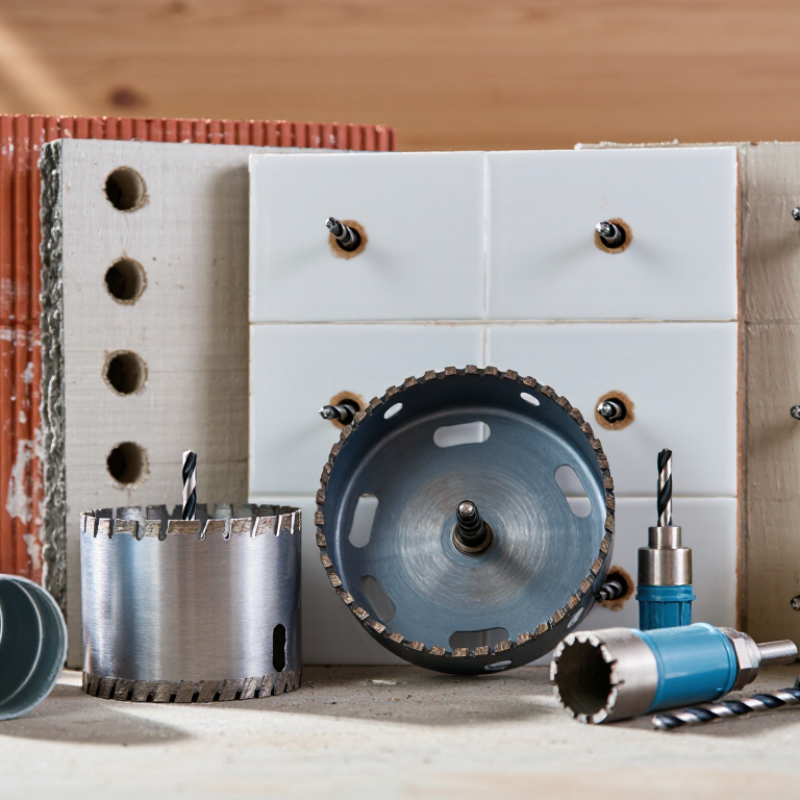
Wall hole saw types suit different materials and cutting conditions. A bi-metal hole saw works well on wood, plasterboard, and thin metal surfaces. Its teeth cut smoothly and tolerate occasional contact with hidden fasteners. For ordinary interior walls, it is often the most practical choice.
A carbide-grit hole saw handles brick, block, and some cement-based boards. It cuts more slowly than toothed models, but its abrasive edge resists hard mineral surfaces. Use steady pressure and allow the tool to clear dust.
A diamond-grit hole saw is better for ceramic tile, porcelain, and other brittle finishes. It needs careful alignment, light pressure, and controlled cooling. Rushing can chip the tile.
Adjustable hole cutters can create several diameters, which sounds convenient. However, they may vibrate more and produce less predictable edges. I have found that a fixed-size saw usually feels more stable during electrical or plumbing preparation.
Check the wall material before choosing. A pilot bit helps maintain position, but it can strike a hidden pipe or cable. A detector and a shallow test opening reduce that risk.
Wear eye protection and control dust with suitable ventilation. Small details matter.
There is no single best type. The wrong abrasive edge can overheat, wander, or damage the surface. Even experienced users misjudge old plaster sometimes. That mistake deserves a second look.
Choose the saw by material, hole diameter, cutting depth, and the finish required around the opening.
The best hole saw depends on the wall, not only the opening diameter.
Drywall cuts easily with a sharp general-purpose tooth design. Wood framing needs stronger teeth and steady pressure, especially around knots. Masonry requires carbide grit or masonry-rated teeth because brick and block create heavy vibration.
Ceramic tile demands a diamond-grit cutter, slow speed, and cooling water. Metal studs need bi-metal teeth and a reduced cutting speed.
Wall composition also affects safety and energy performance. The U.S. Department of Energy reports that air sealing can reduce home heating and cooling costs by 5% to 30%. A rough opening can damage insulation or leave gaps around pipes and cables.
OSHA limits respirable crystalline silica exposure to 50 micrograms per cubic meter over an eight-hour shift. Masonry cutting can create this dust quickly. Use extraction, ventilation, and suitable respiratory protection. The details matter.
Tips:
Tap the wall first. Check both sides when possible. Use a stud finder, but do not trust it blindly. For tile, mark the center with masking tape and begin slowly. For masonry, keep the cutter square and avoid forcing it.
I still measure twice, and sometimes the hidden wall surprises me. That small pause prevents a costly repair.
What Is the Best Type of Wall Hole Saw?
Key Features of an Effective Wall Hole Saw
An effective wall hole saw begins with the correct cutting material. Bi-metal teeth suit drywall, wood, and thin sheet materials. Carbide-grit edges perform better on brick, block, and some masonry surfaces. Using the wrong type can cause slow cutting, chipped edges, or premature wear. I always check the wall material before selecting the cup.
A stable pilot bit is equally important. It keeps the cutter centered and reduces wandering when drilling starts. The saw should also have a rigid body, sharp teeth, and a secure arbor connection. A useful size range helps installers create openings for pipes, cables, and recessed fixtures. However, a larger diameter can create more resistance and heat. Bigger is not automatically better.
Dust control deserves serious attention. A depth stop can protect hidden surfaces and prevent cutting too deeply. Some designs allow vacuum attachment, while others rely on careful, controlled drilling. In practical use, I prefer a hole saw that changes smoothly between sizes and fits the available drill chuck. Compatibility is easy to overlook. So is comfort. A heavy cutter may feel solid, but it can quickly strain the wrist during overhead work. My own judgment is not always perfect, especially when wall layers differ from expectations. Test drilling in a discreet area can reveal plaster thickness, voids, or unexpected reinforcement before the final cut.
| Wall Hole Saw Type | Typical Wall Material | Key Cutting Feature | Best Applications | Main Advantages | Important Limitations |
|---|---|---|---|---|---|
| Bi-metal hole saw | Drywall, plasterboard, wood, plastic, and thin sheet metal | High-speed steel cutting edge welded to a tougher steel body | Electrical boxes, cable routes, pipe penetrations, and ventilation openings | Versatile, impact-resistant, and suitable for many general-purpose wall jobs | Not the preferred choice for repeated cutting through hard masonry or reinforced concrete |
| Carbide-grit hole saw | Brick, concrete block, cement board, and abrasive masonry | Carbide particles bonded to the rim for abrasive cutting | Wall anchors, conduit, plumbing penetrations, and small masonry openings | Good wear resistance and effective cutting on many masonry surfaces | Usually slower than toothed saws and may produce substantial dust |
| Diamond-grit hole saw | Tile, porcelain tile, glass, stone, and very hard non-metallic surfaces | Diamond abrasive particles attached to the cutting rim | Bathroom plumbing, shower fittings, tile outlets, and stone installations | Creates relatively clean round holes in hard, brittle surfaces | Requires controlled pressure; wet cutting is commonly used to reduce heat and dust |
| Carbide-tipped hole saw | Brick, block, lightweight concrete, and some layered wall assemblies | Individual carbide teeth or tips provide a more aggressive cutting action | Larger service holes and repeated masonry penetrations | Cuts faster than many abrasive-rim designs and can offer good service life | Tooth damage is possible if the tool is tilted, overloaded, or used on unsuitable materials |
| Adjustable wall hole cutter | Drywall, wood panels, ceiling boards, and other relatively soft materials | Movable cutting arms allow a range of hole diameters | Downlights, speakers, vents, and non-standard openings | One tool can cover several diameters and reduce the number of accessories required | Needs careful setup and is generally unsuitable for hard masonry or high-impact drilling |
| Deep-cut wall hole saw | Multi-layer drywall, wood framing, insulation-backed panels, and thick wall sections | Extended cup depth accommodates thicker materials | Long cable routes, pipe sleeves, and openings through layered walls | Reduces the need to cut from both sides of the wall | Longer bodies can be less stable and may require a drill with adequate torque |
| Arbor and pilot-drill system | Most wall materials, when matched with the correct hole saw cup | Pilot drill starts the hole while the arbor transfers rotation to the cup | Accurate positioning for electrical, plumbing, HVAC, and general installation work | Improves alignment and allows cups to be changed for different hole sizes | A worn pilot bit or loose arbor can cause wandering, vibration, and uneven cutting |
What Is the Best Type of Wall Hole Saw?
Choosing the best wall hole saw depends on the wall material, hole size, and finish quality required. Carbide hole saws work well on brick, concrete block, cement board, and some lightweight masonry. Their cutting edges handle abrasive surfaces, but they can chip fragile tiles. Use steady pressure and avoid forcing the tool when cutting slows.
Bi-metal hole saws are more versatile for drywall, wood studs, plastic, and thin sheet metal. They cut quickly and cost less than specialized options. However, their teeth may dull against masonry or dense tile. Diamond hole saws are the better choice for porcelain, ceramic tile, stone, and glass. They produce cleaner edges, but cutting usually requires slower speed and water cooling. Water reduces heat and helps protect the diamond grit.
Before drilling, scan the wall for pipes and electrical cables. This step is easy to skip. It should not be. Mark the center clearly, secure the work area, and wear eye protection. For tile, starting at a slight angle can prevent the bit from skating, although I find a guide jig more reliable. A pilot drill helps with wood and drywall, but it may damage delicate tile surfaces. In real projects, carbide often seems powerful but leaves rough edges, while diamond feels slower yet looks more professional. The “best” saw is not always the fastest one.
Carbide, bi-metal, and diamond hole saws are designed for different wall materials. The chart compares their typical compatibility using a generalized 1–5 suitability scale, where 5 indicates strong suitability.
Bi-metal saws are highly versatile for drywall, wood, and thin metal. Carbide-grit saws are better suited to brick, cement board, and other abrasive wall materials. Diamond-grit saws provide the strongest performance on tile, masonry, and concrete, but are generally unsuitable for wood and metal.
Choosing the Best Wall Hole Saw for Your Project
The best wall hole saw depends on the wall material, hole size, and cutting depth. A tool suited for drywall may struggle against tile, brick, or concrete. Check the saw’s stated material range before buying. Measure the pipe, cable, or vent opening carefully. A hole that is slightly too small creates unnecessary pressure during installation.
For drywall, a sharp carbide-grit or bi-metal hole saw usually provides clean, controlled cuts. Masonry walls need a diamond or masonry-rated design, often with dust management. For ceramic tile, select a tile-rated saw and reduce drilling pressure. Keep the drill speed steady. Let the teeth cut.
I have found that arbor quality matters as much as tooth design. A loose pilot bit can cause the saw to wander across a finished surface. That mistake is expensive. I once marked the center correctly but ignored a hidden stud, forcing a second location. A wall scanner could have prevented it. Check for wiring, plumbing, and structural framing before cutting. Wear eye protection and a suitable dust mask, especially with masonry. Use a stable stance, and avoid forcing the tool when heat builds. Review the cut edge afterward; minor chips may reveal excessive pressure or a dull cutter.